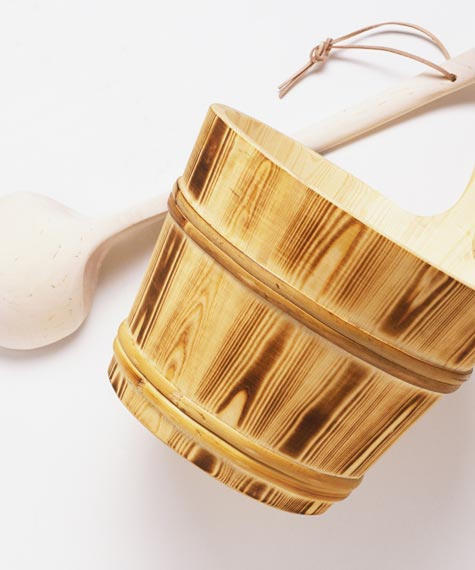




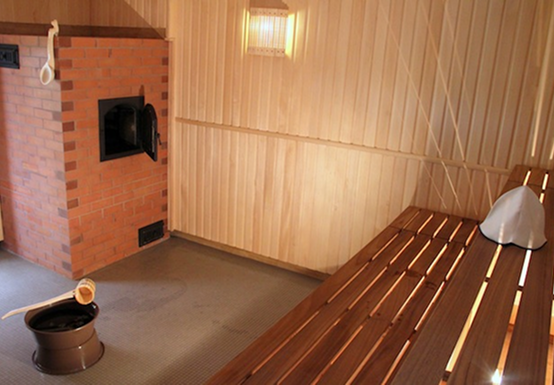
The steam bath in Russia was known to the Slavs already in the 5th-6th centuries. It was enjoyed by everyone: dukes, nobles and common people.
People were born in the bath, died in the bath, visiting it was a special ceremony. According to our ancestors’ philosophy, in addition to its basic function (cleansing the body), the bath is a unique combination of four natural elements: water, fire, earth (stones) and air (steam). Upon visiting the bath, one would absorb the strength and power of these elements and be born again.
Any steam room has the task of removing toxins from the body through the skin. To do this, we strive to warm up and stretch the body as much as possible. If you use a Russian sauna correctly, in our opinion, it solves this issue more successfully than a sauna without steam (mistakenly called a Finnish sauna, because if you look at it, in a real Finnish sauna they also pour water on the hot stones of a stove, but often using a different type of stove and a slightly higher temperature).
Steam is released by the steaming ones themselves as they wave their brooms. There is also a combined method, when steam is first lowered forcibly, and then a supply of hot steam is created under the ceiling, put "on the roof". To do this, it is advisable to have a higher ceiling. This is another important principle of getting good steam and a significant difference between a Russian sauna and a sauna. It is believed that it is the short-term high-pressure pulse when the door is kicked down that is the most important wellness factor of a Russian bathhouse. It's even more important than a broom.
They make steam in the Russian sauna. To make steam is to take it out of the stove. If you do nothing, it will be damp and cold. This is not a disadvantage. Russian Russian bathhouse is a bad Russian bathhouse if the oven in a Russian bathhouse heats up the steam room volume above 50-60 degrees Celsius without adding water. After it is opened, the steam will burn, and the broom will dry out almost as quickly as in a sauna. When making steam, they throw water on the stones in the furnace. The higher the temperature of the stones, the deeper the water disperses, the finer the particles of steam, the drier and hotter the steam at the same time. The word "sushi" here is understood not as a hygrometer reading, but as a pleasant feeling of warm, but not scalding, inhaled air. But there is also an upper reasonable limit to the temperature of the stones. The fact is that steam should be close to saturated, because it is this kind of steam that better transfers heat to the body. Experience shows that the optimal temperature of the stones is 650-700 degrees.
After the steam room, they usually go to refresh themselves, if possible in a lake or sea, in winter in an ice hole or snowdrift. Of course, there are no strict canons, bathing customs are a purely personal matter and depend on habit, health and age.
Once again, we will make a reservation, we must adapt to every Russian bathhouse. In order to study the nature of the bathhouse, you need to steam in it all the time. Therefore, the subtle features of each bathhouse will be better known not by the builder, but by the bath attendant. Generally speaking, building a Russian bathhouse is only half the job.
The second task is to make steam in it. A bad bath attendant can make bad steam in a good bathhouse. But it also happens the other way around: people adapt and manage to make a good steam even in an unimportant steam room. Sometimes they even pour water on benches, walls, on the stove – in some baths this will be a crime, and in some it will be a blessing.Everything is so difficult because no two Russian baths are the same, and the quality of steam is influenced by many factors, including the weather outside. If you are interested in studying, adjusting, and building relationships with people and the environment, then you are a social person. And a Russian sauna will give you real comfort and pleasure. But you have to pay for it with time, care, and hard work.
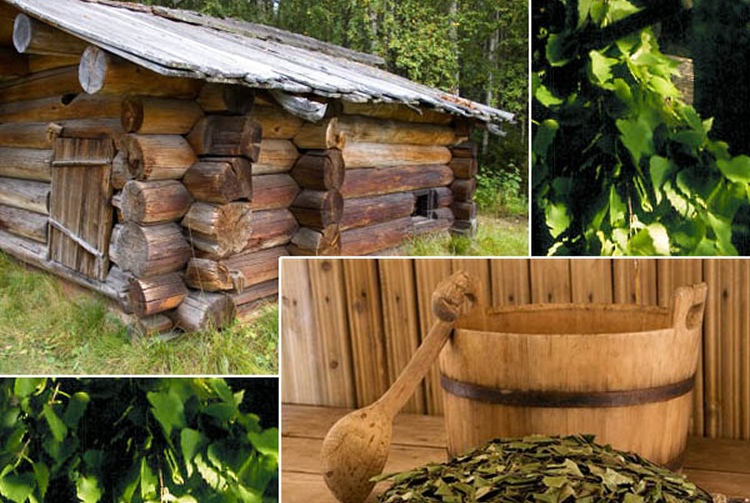
Usually in Russian baths, they warm up first to sweat in peace. After that, they give a couple and often pat themselves with a birch broom. For these purposes, the hanging birch is best suited. The effect of a broom is primarily a massage and cleansing of the skin. According to some rules, a broom is tied with branches of the same birch tree, according to others it is customary to tie it with a rope. If you want to use only fresh brooms, you can freeze them yourself in a plastic bag or buy one at a store. It is more traditional to dry brooms. The best time for harvesting is from the end of June, when the leaves are completely roughened, but the place of birch growth, illumination, weather in a given year, etc. are more important.